Sunday, December 12, 2010

January 28th, 2010 – Fresh Corn


January 28th, 2010 – Fresh Corn
I can’t believe I forgot to write about sweet corn we harvested last December!
My father sowed sweet corn in a row between coffee trees. Without even noticing, one day, all the corns became ripe almost to the point of not being good for eating boiled. We call it green corn. The mature kind, still juicy, we make several type of desserts, varying from puddings, steamed pockets to cakes. We usually don’t eat home processed cornmeal, as we prefer to buy them at the grocery store. My hint is that the dry corns get so tough to grind that it is better to be machine processed.
I walked down the path to the corn field. All the hair was turning from bright red to dry brown. I held my breath and quickly picked a few and ran home to boil some, violating the rule of thumb of putting water to boil before going out to harvest them. Nevertheless, they were good.
As it is usual, I offered my neighbor some. Fast as she can be, she called all her relatives living in a nearby town to announce that off season fresh corn was out for sale. R$2,00 a dozen. This is a little over US$1,00. Cheap even for us. People ordered by multiples of dozen. After recruiting my father and my 8-year old daughter to harvest the whole field, we got several dozens, but prime corns, only 20% of it. I learned that only 2 or 3 corns are really good for retail sales, and the rest on the plant is considered a refuse. For a day, I thought this to be a good business to have. People were fighting for corns. The end of second day, after driving around to deliver the corns and giving away most of it, I came home with R$60,00 (US$33.00). It felt nice to have some money, but thinking about the whole process - the day my father went out to sow, times that he had to work carrying a heavy backpack pressure sprayer, hiring someone to weed, spending expensive fuel to deliver the corns and taking the risk to unplease my customers – it was worth for the fun, but not financially.
My neighbor dona Rosa told me that sowing in January would get me the best corn. Will I sow all over again? Maybe. But I won’t sell it, unless it is very easy or very exp

January 07, 2010 - January Again


January 07, 2010 - January Again
In nothing this January resembles last year’s. It is hot and humid again. It rains very often. Some parts of the country is under the water. Not here. No rivers nearby to flood us. Thank God! But due to the copious rain and Sun since October, my garden is not as bountiful. The wild cucumbers became yellowish before giving fruit. The squash vines also got rotten. No acerolas to harvest.
I have been harvesting okra almost everyday for weeks now. This one I sowed and grew vigorously, after several failed attempts. I can’t really explain, except that the season I sowed were inadequate until I hit the right one.
Like every year, my father harvest green coconuts from his patch and haul them with a tractor. After that, he uses an exceptionally big knife to cut through the tough skin and husks to take the water out. I asked my father to leave some fruits on the tree. I want to have them ripe. This way, I can chew on the coconut and also make desserts from shredded coconut or even extract coconut milk.
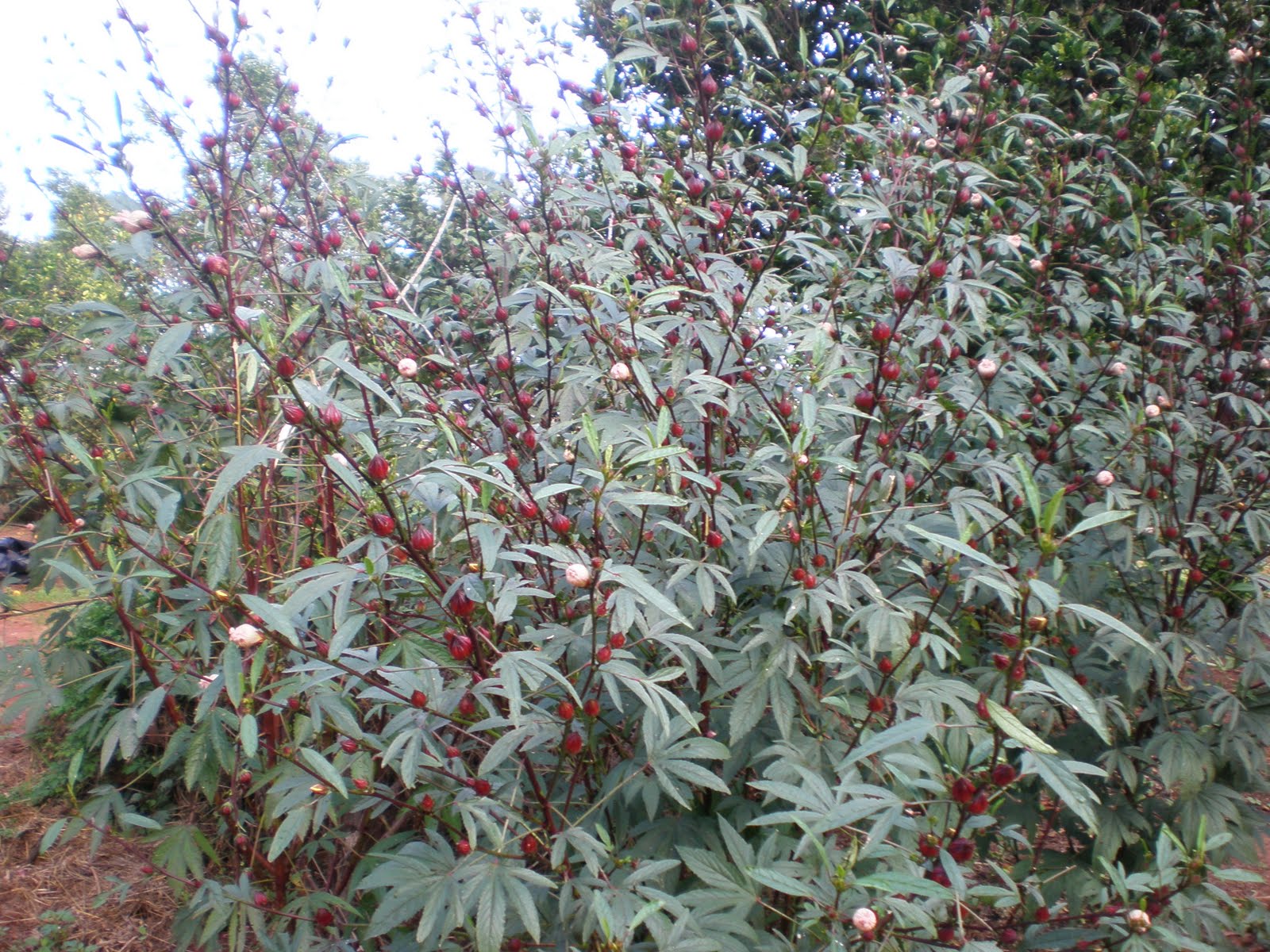
On my vegetable garden, wild loofah grows over everything they can climb. Yet, I don’t want to cut down. I may harvest new loofah for the year. The good surprise is to see that the other variety I sowed is also growing. This may even be good enough for sale. It is big and rectangular shape, rather than a v-shaped ones. I am also going to have lots of hibiscus petals for compotes, jams and juices. Just because I am not very fond of its smell. But it may be very rich in anti-oxidants. Deep reddish purple that leach onto our hands.
The best gift from Nature so far is the freshest and youngest taro roots I get to dig a few minutes before cooking. With some white onions, strips of beef and kelp, seasoned with sugar and soy sauce, this Japanese country dish is a delicacy tasted by few people living in cities. My aunt told me that her best memory of this root was of her mother who used to make a lunch box with steamed rice and taro root and bring it to the coffee plantation where they worked in 1950’s.
I planted dozens of fruit trees about six months ago. For the first months, I had lots of work, specially for need of watering. Some fertilizers and sporadic and irregular spray with Bordeaux mixture, I have all forgotten about them even when it needs taller stakes. But I watch a fig tree already bearing lots of fruit. It was a nice surprise. I can see the purple meat inside. But what is on my mind the last few days is a green papaya compote with fig leaves. It is simply cooking washed and peeled pieces of green papaya with sugar and fig leaves, which gives it a delicious yet delicate aroma. The final product should resemble a traditional peach compote with thick syrup. Tomorrow maybe...
I have also to make more soap as I am running out of them. I have give them away as a gift to so many people that the bars I have left may last only for few more weeks.
This month also I think I learned how a sweet corn puree like dessert should look like. Dona Rosa gave me a tray of thick, creamy and deep yellow cake. The last one I made turned out watery. Too much water, of course, and too short time a cooking. I learned.
I usually talk about good food. Besides my failed sweet corn dessert, for some reason, my zucchini bread made with green squash and chopped macadamia didn’t come out good. I also threw away palid watermelon.
My daughter is in the Central part of the country where pequi fruit grows wildly. I learned to love it. It’ s smell, so particular, gets caught in our brains and it is one of the foods that we miss terribly when living far from there. I never lived there. But I learned to love it. I asked my 8-year old girl to tell her grandma to make sure to send me some fresh pequi fruits and homemade ground turmeric.
I never learned to really appreciate free-range chicken my neighbor raises around her house. One of the reasons is that chickens roams everywhere and eat things without any discrimination. They even pick on top of used diapers...Yuk. The last chicken she gave me as a Christmas gift, I recycled it: I gave it to my aunt who happily took home to the big city. Big city people: so naive...

December 25, 2009 – Christmas on the Farm (neighbor’s)


December 25th ,2009 – Christmas on the Farm (neighbor’s)
The sky full of promise of heavy rain never came through on Christmas Day. Partially sunny nevertheless hot and muggy, the main dinner of the year, like all the previous years, reunited family members and some stray friends. As such, I showed up at first one bringing a 2-liter Coke. I parked in front of the house where three other cars had parked. I felt the familiar smell of grilled meat. A few steps downhill, in a fiberglass covered shack, a dinner was being conducted. Rather a quiet and orderly meeting, with modest bbq grill and people sitting around the table. Salad known in restaurants are “complete”, with cooked potatoes, chayotte, carrots, hearts of palm, onions, cucumber, tomato, onion, and olives drizzed with oil and vinegar. A salsa made of chopped tomatoes and cucumbers, potato puree stuffed with shredded chicken in tomato sauce, boiled madioc roots, plain rice, roasted pork, and grilled beef and stuffed sausage made up the feast. As dessert, the sweetest non-acidic homegrown pineapple, homemade ice cream made of packaged powder in strawberry and peach artificially flavored, and store bought chocolate cake. The big secret of eating well, if one can do so in big feasts, is to avoid greasy or starchy foods. I started out with grilled meat and salsa. I followed with vegetable salad and pork. A tiny bit of the rest. I still had room for more pork and beef. I left the table feeling well fed, yet light. Untill...a big piece of chocolate cake was given to me. I left bringing home a bag full of ice cream and grilled meat. But nothing can be compared to what I would hit on my way home.
Dona Rosa lives by the road to my house. I stopped to wish them a Merry Christmas. A big bamboo tent was built to shade from the sun. About thirty merry people were celebrating with beer, bingo, and of course, with great food. Dona Rosa rushed to welcome me wearing a red tank top contrasting her stark black colored hair (and without a cap). Her son-in-law and a grandson brought me a cold beer, while she pushed me into the house to eat. “Come, the pork is still hot. It’s in the oven”. Inside the brick mud oven, fired by possibly the wood I gave her, she pulled a tray with beautifully roasted baby pork ribs. I was able to eat just a little piece, regretting I had had a big piece of cake a few minutes before. A chicken mayo salad mixed with cooked vegetables, farofa (mandioc flour mixed with minced meat, sausages, and seasonings) and boiled mandioc to eat along. Before I left, she packed more pork and beef for my father.
I stumbled back home looking forward for my daily siesta. All day with rich food like today’s, a nap is mandatory. But it’s the only day a siesta cannot be taken. It’s a special day.

December 23, 2009 - Christmas Is Two Days Away


December 23rd, 2009 – Christmas Is Two Days Away
Not much to think or even to choose. I wrapped two hand towels for Lindaura and some candies and a hand painted kitchen towel for dona Rosa. I delivered them this afternoon.
Christmas is two days away. Many Brazilians celebrate on the 24th with midnight supper, specially in big cities. But here, my neighbors will gather family members on the 25th. I received two invitations to dine with them. Not surprisingly, from dona Rosa and Lindaura.
I stop by their homes very often. From dona Rosa, I get handmade bread baked in a wood fired mud oven, papaya, mandioc roots, okra, or anything that she has in her kitchen. She wanted to slaughter a free range chicken for my Christmas dinner. I declined as I would dine out. She then invited me to stop by her house as lots of people were going to gather there. They are building a shack to protect guests from the scorching Summer sun.
Lindaura is the woman I give a ride every morning. Besides giving me money for the fuel, she gives me oranges every week and shoes. She works as a maid for her sister who owns a shoe shop. I guess my stories of poverty followed a divorce makes her take a pity on me. This way, she gives me anything she can. Just to think that I first offered her a ride to have her save money. It ended up that I gain much more than money and little gifts, but a dear friend.
I left Lindaura’s house with a bag full of oranges, two pineapples, and black peppercorns! I couldn’t believe it. A vine with little bunches of green and red pearls that become black under the sun. I asked for a seed plant. This was one of the seasonings I wanted to have.
I am looking forward to Christmas dinner. No turkey, ham, or even roasted chicken. Both families are going to have barbecue outside. It may seem unusual, but it is actually a very common way of celebrating anything down in Brazil.
Merry Christmas!

December 8, 2009 - Fresh Meats


December 8th, 2009 – Fresh Meats
My neighbor dona Rosa came riding on the back of a tractor with her son and daughter-in-law for a day of tapioca making (process of taking starch out of mandioc roots). Along with the indefectible smile, she hanged a plastic bag with tilapia (fish). “My son-in-law brought from a fish farm.” Increasingly, fish farms are becoming more popular. It is called “fish and pay” for places that raise fish for fishing in artificial ponds. Even so, fresh fish is always a treat. MC didn’t like to eat fish from rivers as many people die by drawing and may have become fish food. “She has a point”, I thought. Being so, my preference goes to fish taken from private tanks. Specially because we don’t have large rivers in my region and ocean is hundreds miles away.
Sunday afternoon my father, my daughter and myself showed up unannounced to my cousin’s farm. We pretended we didn’t see a party going on with rented foldable tables on the backyard. In an businesslike manner we handed a bag full of ripe lychee nuts, a much prized fruit, and went on to ask about sheep raising. The old coffee farm is now a pasture. Almost unrecognizable place where I spent my childhood, their old house is painted, a garden manicured with long golden leaf bushes along the entrance, historical barns and buildings were kept. The house I lived for 12 years is still there. It’s now their employee’s house. Even a small chapel was built. The place is no longer oppressive even though it still holds great part of my memories. “We have not sold to meat plants. We slaugher the lamb and sell them individually.” “We slaughtered three lambs for my sister’s wedding party”. I remember it being very tender and tasty roast cut into small bitesize pieces. It was better than the traditional grilled beef. This kind of animal farm means that we have easy access to fresh meat any time we want. I have still not gotten a watering mouth for lamb, even though I ate it everyday in Santorini Island (Greece) with a glass of local white wine. “My boyfriend said he is going to prepare lamb exclusively with coarse salt someday and will invite you to dine with us” – so said my other cousin while I was showing her my lush herb garden full of sage, rosemary, thyme, oregano, marjoram, dill, hot peppers, and much more. I am still waiting for the invitation. Driving around the countryside, very often, I see signs written “we sell grapes”, “we sell honey”, “fresh corn”, and also “we sell lambs and muttons”.
“How much pork do you want?”, so asked my neighbor from whom I buy raw milk and cheese. That’s the same family that gives me free cream and goat milk. “Well, just a little piece. My parents don’t really eat pork, and my daughter is little”, I responded. They intended to sell me at least a quarter hog. People from my neighborhood choose a piglet to have slaughtered and delivered clean. Besides all the meat we can use, the choice fat can be turned in bacon or lard, and other less desirable fat can be made into a great full lathering white soap.
My other neighbor who owns a roadside restaurant came up with a “business opportunity” or feast opportunity: several of pig for sale. “I no longer can take care of all these pigs. Too much work. You buy the pigs and I will give you leftover food”. My father doesn’t like pig raising for they smell, so I declined the offer. But I suggested “you can slaughter them all and freeze to later serve at your restaurant.” It just came to my mind that no refrigerators other than from a professional butcher could hold thousand pounds of meat. Besides, it may be illegal to serve non inspected meat.
“My parents raise ducks by the pond”, said a pretty woman recently arrived to town. She was taken a plant nursery course hosted by me, on my farm. “Have you eaten ducks before?”. I had eaten Peking style duck in Chinese restaurants and smoked duck leg over Vietnamese noodles while in America. “Yeah, it tends to be a little fatty”, I said. “Oh, you haven’t tried duck with orange! It is superb!” Since then I only think about ordering a ready-to-eat dish, since I think I wouldn’t be able to roast it into perfection. Well, this is my fantasy. They only sell live ducks and I need to take care of the rest. Besides, farm people have hard time to charge for goodies they have in their properties. I may end up with whole Canard a L’Orange as a gift I feel embarassed to accept.
“I feel so sorry for the goats that go for roasting”, Silvia confessed with grief. She is the person I mostly associate with goats as her family always had it around the house. I was always enchanted by the bucolic scene of goats grazing under eucaliptus trees. Almost thirty years has passed since then, and she is back to the farm raising free range chickens and goats to continue her mother’s work. I suspect that she still eats goats that she feels sorry for.
While looking for Jersey cows, I run into a middle man who buys and sells livestock. He kept milk and beef cattle in the same pasture, along with horses. I was worried about disposing of old cows. He said he would buy them. “Awesome”. But that didn’t feel right to me. Why in the world someone would want an old milk cow useless for re-sale? Having a father who is a butcher with a meat store I wouldn’t be surprised if all the meat were cheap but tough. Incidentally, this butcher teaches Charcuterie: the magic of transforming unedible meat into delicacies.
An unusually handsome Mediterranean looking man, in his mid-thirties, president of small farmer’s association of a very little town, who said plants and raises everything he eats, works by himself planting coffee and mangoes, single and living with his parents, works at a sugar cane plantation for a large ethanol and sugar company, and also goes to college to complete a business degree, contradicting the politically correct action taught in the Rural Entrepreneurship class bragged: “so I went into the woods and hunted a wild boar.” I was flabbergasted. Hunting or keeping wild animals is a crime, but for this man, hunting meant Sunday dish. Not that he was famished, but rather he did what his father had done in the past. Hunting was a regular food getting activity.
Talking about game...I spotted a hare crossing the road. She could be hunted like Frenchman would do. I could catch a lizzard or shot a pigeon or any other meaty bird without leaving my farm. If two days ago, I could catch an armadillo with bare hands on my front garden. I heard they all have good meat. Unfortunatelly I buy packed meat at the largest supermarket around. Even freshly slaughtered free range chicken with deep yellow skin (this indeed looks artificially colored, but it is not, of course) brought to me as a gift disgusts me. I am not used to see the real thing.
I must be very privileged. The real thing is everywhere within reach without going to the supermarket or even to the butcher. A farmer can do it for me the old way. It’s a pity that this kind of commerce is threatened by the sanitary laws. It seems contradictory that on those courses offered by the extension agencies teach charcuterie and cheese making, products which may not be sold at all. In any case, only old folks slaughter animals on the farm. Lot of people, like me, wouldn’t do it. After this generation is passed, we will only find frozen meats neatly displayed in yellow trays with a label as an only way to identify the sacrificed animal.

November 25, 2009 - Lychee Bounty


November 25th, 2009 – Pickling Peppers and Okra
The increasing heat still in the Spring time has turned most garden vegetable unable to thrive. Even the chayotte vine has got some kind of disease in which the fruit turns crocked. Summer squashes, after yielding some, look miserable on the plot, where some fruits hang on dried vines.
I have lost several sowings either directly on the soil or in trays. Strong winds, scortching sun, my forgetting to water, all contributes to an empty garden. Some winter vegetables are still there such as celery and leeks. The first one cannot really be eaten raw, as it has become hollow and dry. It never really developed to be a regular crunchy stalk with mild flavor. The leeks are doing better, surprisingly resisting the weather. I basically have abandoned the bell peppers, tomatoes, even New Zealand spinach that sprouted several weeks after sowing and that only now it seems to grow, almost to the point of being able to harvest.
Winter was very short. It seems like it jumped straight to summer, as I was not able to do any spring work, or anything that farmers would do up in the North Hemisphere. It is too hot with heavy rain. No seedlings can survive the attack of critters or fungi. Before a beautiful collard greens patch is now a creepy looking site, by catterpillars having eaten all up, in spite of my spraying with tabacco leaves extract.
I can’t complain though. I can still gather some edibles. Okra bushes grow lush fighting bravely aphids and mildew. Few more squash vines appear here and there. With generous amount of “biquinho” pepper (a beak shaped small pepper) that allowed me to play with pickling. With cayenne pepper, I have made hot pepper sauces with vinegar or cachaca. It is never too little a harvest that I cannot give away some.
But the nicest thing right now is lychee nuts. The tree, after suffering from drastic pruning and attack by termites, produced great fruits. They are somewhat rare in the market and therefore expensive. The short duration of the harvest make people go crazy over the fruit. A friend’s husband told me that he used to climb on the tree and eat as much as he could to stop only with a diarrea. Well, I am not very different. It’s impossible to eat just a few. The juicy flesh, light, scented like a flower is so inviting for more. The lychee tree is tall, but some branches are low, so my daughter can eat picking straight from it. Since the first ones started to ripen, we visit the orchard every afternoon. Today, I climbed on the tree with a pruning shear to collect enough to give away to people that make up the first on the list of “ must receive”.

October 25, 2009 - The Church Fair


October 25th, 2009 – The Church Fair
For the first time I have been to an event happening in my neighborhood. My mother never allowed me to participate to anything partylike while teenager. So, taking my own 8-year old daughter to a church fair had a taste of wonder for me.
Church fair in Brazil is nothing like those ones in America. To start with, it is not a daytime event. Yesteryears it may have had more games with prizes, but gradually it became a food feast. We go to eat, drink, to see and to be seen.
Venda Branca on ordinary days is an empty place. A little white brick Catholic church, a fairy large partyroom, a grassy space with some trees. On the other side of street, two bars, one of which closed. It mostly sells alcoholic drinks to men. It used to have an elementary school, but children now are taken by bus to the town instead. Nearby, a family style farm hotel owned by a young widow who transformed her country home into a business. By the road, an artificial lake made into a “fish-and-pay” place. It is less than two miles from my house.
Having lived on a farm all my childhood, everything seemed so far from us. The bustling aspect of downtown, the stores, the ice cream parlor, the movie theather, the availability of goodies (candies and fake jewelries), the friends just across the street, school at walking distance, a fulltime housekeeper, and even the TV set were unreachable luxuries to me. Last night, it all turned reality. That’s how Cinderela must have felt the night of the royal ball. Of course, in my case, no prince was ever there. (But my daughter found a frog by our bedroom door. Was it he?)
I stopped by Lindaura’s house to pick her up. She is the one who invited me to come along. I see her almost every day, as I give her and her son a ride every week morning. Little by little, she has turned part of my routine. As I arrived, Lindaura was trying to straightening her hair as fashion demands for party nights and dressing a borrowed a blouse. I went plain.
We arrived early. Hundreds of white tables were spread around the the garden, beside the church and even on the back ot the partyroom. A different sight from forgotten place it usually is. It looked so promissing, until it started to pour. Forty milimeter of rain in one single night. It went from hot and muggy to wet and cold. But we took the table inside, and were in the middle of all action.
Thirty years ago, my mother drove quickly to the very same event in the evening to pick up a roasted piglet while we waited at home. We devoured it smothered in soy sauce and fresh ginger. It was such a memorable degustative experience that it opened by taste buds for this kind of meat. Evoked by this memory and gluton fostered appetite, I went to the fair expecting to repeat the experience.
Discouraged by my friend about other meats, I picked skewered deep fried beef as it was big and cheap. This way I wanted to start my night, before chicken and roasted pork. The crust was burned and the meat tough and somewhat tasteless. The one my daughter didn’t want to eat, I had it with a can of Coke. So I was settled for the night. My friend didn’t stop repeating about the rain and the loss it made. My daughter talked breathlessly stimulated by the soft drink. My friend’s son was gone around. I yawned for two hours.
I couldn’t leave as country people do everything to delay you. Lindaura kept asking to stay longer saying something like “the rain stopped. More people are gonna come”, as if I were expecting them. What I wanted to eat were already frustrated by filling me up with tough meat and her untold reproval of spending money in more expensive dishes.
The event went on with a head on roasted suckling pig auction. Egnaldo, a funny name as it is usually spelled Agnaldo, was proudly displaying the roast he baked in his giant size oven he once showed me. (The one who used a Scania truck tank as an oven attached to a wood burning stove).
For “to see and to be seen”, I saw one or another people I was expecting to see, such as Laercio, the man who sells me the milk and cheese, dona Rosa’s family, MC’s parents-in-law (the man who smells like urine). Some others I was not expecting, but recognized. My milk project instructor was there. But most people, I have no idea who they were or, I was unable to recognize.
MC told me she was lucky in raffles, which she had gotten in previous years a couple of chickens and also a piglet. I wanted to get a piglet and a goat.
I was so excited about the idea of getting those animals that when a woman came selling the numbers, I got two. But the prize was bermuda shorts, a lady’s bag and kitchen towels. I didn’t want them even for free. The excess noise, packed room, and lack of opportunity to buy more numbers for other prizes (a selling woman seldom came by our table), my much anticipated raffle for live pig and goat didn’t happen until I left. (To tell you the truth, I only saw a rooster in a cage shriveling by cold weather).
The road back to our house was muddy but we arrived safely before 10 pm (early for Brazilian standards, as many people were still arriving at that time.) After catching the frog in the hallway and kicking it from the house, we hit the bed. With somewhat nice experience but lack of luck all night I didn’t even try to kiss the frog in attempt to find out if he was the enchanted prince. But also, with so many other small frogs in the house, it would take all night, specially to catch the fugitive jumping ones.

October 19, 2009 - Chayotte, Squashes and Wild Cucumbers


October 19th, 2009 – Chayotte, Squashes and Wild Cucumbers.
Time of chayotte, young squashes, wild cucumbers. None of them I planted. Chayotte vines were planted by MC’s husband who also put together good size tutoring for six seeds. Some kind of rust took over the vine a few months ago. I cut them down in attempt to eliminate the plants, but they grew back stronger and now they are yielding several bland tasting pear shaped fruit vegetables. I love them. I cook them every day. I steam cook after sauteeing in oil and garlic. Or boiled them to make a salad seasoned with sliced onions, soy sauce, lime, and olive oil. In my daily walk around I bring back from six to eight chayottes, as they grow very quickly, and in one day, the skin can become tough and prickly to touch. The rain helps to fill up the fruits which must be 99% water. A popular saying says that chayotte is the fourth stage of water along with solid, liquid, and gas.
Squashes appeared spontaneously in several points of my orchard-vegetable garden. At least three different varieties of it. One is round, the other one has a neck, and the third one may be cabocha. But only the first one has been maturing quickly, and I have collected many of them and given away. Some fruits were left on the spreading vine, while other young ones I harvest to sautee with garlic, or to make a savory baked cake with tuna. Another tasty way of eating that is to shred it and mix with a batter and other seasoning to be deep fried.
Wild cucumbers are prickly fruit with taut skin with lemony flavor, being shorter than pickling cucumbers. Most farm people love to eat it cooked with some meat or sausage. I usually sautee it with garlic.
Along with these little gifts from Nature, I harvested yellow onions. I let them sun dry properly to produce the papery skin. My main mistake on this crop was not to transplant them and to offer a little space for them to develop. Most of them have a small head. They could be bigger as a few of them showed where I transplanted properly. Now, the pickling white onions were a complete failure. They never developed a head, becoming slim just like leeks. I pull them anyway and I am letting them dry on the ground. As it rained, I may have lost the whole thing that I didn’t care to start with. My plan now is to try to sow head onions between the coffee bushes, so they can have large space to develop.
My salad tomato suffered terribly from pests and diseases, as I didn’t spray them preventively. The vines ended up dying. Yet, I ate a few tomatoes riped on the vine. To my frustration, even ripe tomatoes are not sweet as they are found at organic farmer’s market in California. Or even in Florida. To overcome a bad crop, I planted long cherry tomatoes which don’t become blood red, but rather a whitish red, looking pale. They do the trick, but the sweet ones are only the spontaneouly grown cherry tomatoes. I just wished they were bigger so I could prepare sauces and eat less of the skin.
Even though the “glorious” winter garden are gone when I had beets, carrots, brocolli, lettuce, collard greens, and many more vegetables that I can’t recall all of them, I still harvest timid portions of green beans, peas, bell peppers. Cayenne peppers and chocolate kiss shaped little peppers are now ripening. I have made a batch of hot sauce with cachaca (sugar cane alcoholic drink) and presented my dear neighbor dona Rosa. She told me that would go well with coxinha, a national favorite deep fried croquette like finger food made with mandioc and filled with chicken. Yum! I just bought chicken and bread crumbs required for the recipe.
I am eating a second crop of salad bowl lettuce. For some reason (it may be my lack of enthusiasm for the novice has gone to this variety), the heads didn’t develop as big, but they are still delicious. Collard greens get harvested constantly. They are either given away to friends or eaten sauteed with garlic. Yes! One of the best way of eating any vegetable is to sautee quickly in hot oil with garlic.
To my big surprise, we are getting strawberries steadily from on single bush that were told to be sterile. They are sometimes sweet, sometimes sour, and most of the time, small, but they still make a beautiful delicacy fruit to my 8-year old daughter that used to have easy access to strawberry while living in the US.
Three other vegetables have a very small growth. It may be due to very short winters here. The celery is dark green with strong flavor and aroma. It is even hard to eat it raw. The leeks do not get fat easily. The white part of my giant green onions may have a similar use in case leeks fail. The third vegetable is Brussel sprout. The heads don’t develop while the leaves are lush.
I am finally understanding and having to accept a few basic things: sow disease resistant varieties for our climate by using hybrid seeds (which costs a small fortune) and grow what everybody else have. No novelties. Have to build a greenhouse or at least a mesh covered area so the vegetables don’t grow too tough and strong flavored.
I understood why most people don’t grow brocollis. Of course, it takes almost the whole patch! Besides, they need constant care. The same is valid for tomatoes, bell peppers, eggplant. What most people have in their garden are green onions, parsley, cilantro, wild chicory and collard greens. Some more dedicated ones would have lettuce and New Zeland spinach. Rural people would have those three above mentioned veggie fruit vines (chayotte, squash and wild cucumbers), mandioc which is the most amazing root, and perhaps yam. Speaking of it, dona Rosa gave me young white skin and purple meat yam. I soon asked for shoots for me to plant in my garden. They are happily growing without any death among them.
My neighbor and I continue in our trade. She bakes the bread and gives me what I don’t have on my farm. She is a simple farm woman who doesn’t own the land. Yet, she knows what good food is. So do I. Our language is food. A few days ago she came with her son and daughter-in-law to make tapioca starch from mandioc roots. She takes our roots and uses our electric grater my father adapted from a saw. I served them some savory baked cake made with ground beef. She brought me next day fresh organic chicken properly cleaned. I made a tuna squash savory cake in return. She gave me deep fried mandioc starch doughnut. And so our endless trade continues.
I try to involve my daughter in my gardening experience. She collects tomatoes and green beans, and also some bugs to drop them in soapy water. She only touches beetles but refuses to handle caterpillars. I soon overcame my disgust and started to pick them by bare hand. Clara and her cousin sowed some beans in a wet toilette paper. Later, she wanted to transplant outside as she saw me transplanting other seedlings. I didn’t believe that they would succeed. But they did and they are now full of mature grains in the pods ready to be harvested. She can’t wait to eat them. We may get half cup of it.
While most vegetables get eaten by me or by pests (such as mustard greens), the herb garden flourishes. I don’t use these seasonings very often, specially because my father doesn’t like them. “The food smells like grass”, he grumbles. Also, Brazilian food almost doesn’t take Mediterranean herbs, except perhaps for store bought dry oregano. In spite of that, the patch grows with added herbs I have been getting or exchanging with acquaintances: anise seed bush, thyme, cavalinha, more mint varieties, and other native medicinal herbs. Thank God I don’t need them. Most of the time, I only resort to bitter boldo leaves after a heavy meal. Nonetheless, I am very interested in growing the medicinal garden to 400 varieties, just like the gentleman I saw on TV. We call it “alive pharmacy”.
I have projects and dreams. My dream of transforming this piece of land in self-sustainable, self-suporting farm. I want to have a variety of animals and plants, and still make money. The project I have is to start a milk farm with Jersey cows on a very small plot. It is going to have a rotational pasture. The most ambitious part is to transform the milk into cheeses and the best gourmet ice cream a la creamery fashion.

September 22, 2009 - Scallion Feast


September 22nd, 2009 – Scallion Feast
Vegetable garden for my parents meant a small patch of scallions. We didn’t even have parsley which I loved to cook with.
When I was a child and still lived at another farm, my mother had garlic chives growing among the coffee bushes. These kind of chives has wider leaves than those ones grown in the West. It are also flat-leaved and tastes something between garlic and scallions. The only way we ate it was chopping thin and seasoned as salad with soy sauce and salad oil and pour it over hot steammed rice.
I don’t know how I develped taste for garlic and onions, but pungent raw taste of certain veggies well replace hot pepper sauce. That’s why I love arugula, watercress, and bitter leaves such as chicory, radicchio, endives, mustard. To tell the truth, I enjoy most greens.
The first scallion sets that I brought from a nearby farm looked very frail. They were cramped in a little muddy spot. My father didn’t even believe that they would grow into a decent size plant. So he recommended me to go to the farmer’s market to buy new scallions with roots we could plant after eating the leaves. So did I.
Several weeks later, we started to enjoy scallions regularly. A few months later, we definitely have way above we could use. The plants started to show signs of stress with bent leaves and the jammed stems. It was time to harvest them and replant as new sets. As a consequence, I have royal quantity of scallions for several meals. It was this way that I got into scallion feast.
At the same meal, I lightly steamed whole scallions and seasoned with sugar, misso paste, and vinegar. I also made scallion salad (more like a dressing) with soy sauce, olive oil and rice vinegar to pour over hot rice. This one I have every day, even for breakfast. The taste of it is so addicting.
I had to think about a dish that could take lots of scallions. I then remembered two Chinese snacks: scallion thin pancakes and pan-fried scallion bread. Instead of half-cup suggested by the recipe, I used at least two. The little piece of bread that was left over for the next day, I had it with my infamous scallion dressing. I couldn’t feel thirstier on the desert. I went around the town barely opening my mouth to speak to people, wondering how my breath smelled. Anyway, there is still one more recipe to try: scallion crepes. I am just finding out that Chinese people must love scallions as much as I do.
Remember that I had also sowed white pickling onions and yellow onions? They are soon be ready for harvest. Some of them are two-thirds out of the soil, showing its readiness. A few more days, and under dry weather and hot sun, I will pluck them out. Now, I have to think about lots of dishes that would take bulb onions.

September 19, 2009 - Round in the Garden


September 19th, 2009 – Round In the Garden
Nine months have gone since I moved back to the farm. The short winter has gone and spring is just around the corner bringing back cool breeze, burning sun, sporadic rain, blooming fields and bounty.
A few days ago, walking around the house, I was hit by the perfume of white blossom: coffee, cow’s feet, pitanga, acerola, orange, lemon, and still other that I don’t know the names.
My father and I partially fixed the leaking roof. We laid an extra layer of ciment before we painted it with waterproof material. It was a relief to hear the rain falling without getting wet inside the house.
I have given away basketfull of lettuce, collard greens, parsley, scallions, and even broccoli. I was very proud of having gotten a harvest of this brassica as I had never seen anyone planting it.
This morning, I went around the house gathering some edibles. Under the raindrops, wearing a straw hat dripping water, I came back happy. A little bit of cherry tomatoes hidden under the hibiscus tree, scallions, parsley, first time harvested bell peppers, a cob of corn, very strong tasting celery. All to make a salsa called “vinagrette”, which is made of chopped tomato onion based salad seasoned with vinegar and olive oil. I love to add lemon and garlic. And sometimes red hot pepper.
I harvest every day. But I don’t gather everything available. I leave there until I want to eat it. I collect young green squash to sautee. I have been picking green beans, with only one really yielding bush, I get about ten pods per day. I leave this job to my daughter, so she can learn the pleasure of harvesting her own food.
In my daily round, I found several chayottes hanging on rotten bamboo tutors. I rushed my father to build a new canopy type to support all the heavy bearing fruit which vine has an avid climbing habit. This, along with okra, is one of my very favorite vegetable. I can pick as young as I want without having to comform with hardened old commercial size ones for sale.
Most vegetables, I either eat it raw in salads or lightly sauteed with garlic keeping its crunchyness. Sometimes, I also steam it to I can taste its sweet natural flavor. Julienne chayottes can be eaten sauteed. But I like to dice it and cook it with garlic, partially steamming it in few drops of water so not to burn. Right before taking out of the flame, I sprinkle on generously with chopped cilantro. Chayottes is also very appreciated as cooked salad and dressed with vinegar and oil.
Once I gave a kick start by preparing the soil and sowing, and sometimes watering, nature does the rest. Even when I am not expecting, it shows its fruit. Abiu, a persimmonlike fruit got fertilized and later pruned. Without noticing, it beared a heavy crop of yellow fruit, with delicate flavor and aroma.

September 6, 2009 - Of Bugs and Pests


September 6, 2009 – Of bugs and pests
One broccoli head turned out bigger than the market average size, as my father observed. My aunt quickly said “give this to auntie Celia” not knowing that each head is awaited anxiously. Only one head per plant. I had never seen any planted one before, so I didn’t know that the adult plant would require quite a bit of space. Actually, I didn’t want to believe the information and didn’t follow instructions on distance between plants. To make it short, all my veggies are now cramped into a little raised bed which sides were washed away. Most plants have long crooked necks.
My very first experiment with vegetable gardening was a disaster. The only few things that managed to sprout were eaten by pests in front of my very eyes. I even saw some slug half body inside the soil taking a huge bite swallowing the sprout from its roots. So, the first few weeks on my new garden went peacefully without any shadow of insects. But they finally came. Beetles attacked mustard greens leaving holes or eating the whole plant. Even those ones that survived and grew big still carry dozens of beetles and their larvae between the leaves. I saw white butterflies laying eggs on arugula and collard grees. White flies flying over other greens. When I lifted the brassica leaves, hundreds of aphids hidden underneath. They killed my cucumbers. Catterpillars managed to poke a hole on zucchinis and killed them too. Mildew on other squashes brought some losses. Some other kind of grey beetle with white dots populated my tomato plants. My daughter and I caught most of them by hand and dropped them into soapy water. It worked. But my tomatoes still suffer from something. One technician said it is antracnose, other said lack of calcium and bugs that laid eggs inside the flowers. So sad to see a strong tomato vine hanging dozens of green fruits not to go ripe, but getting rotten bottom instead. Tomatoes are not an easy one to grow. They are not adapted to our climate, so they carry a variety of diseases that are hard to control organically. But my other variety is younger and doing better. I allowed more space between them and started to spray with nehem extract earlier. Other spontaneous tomato vines around the house are growing stronger, except the bigger fruit variety. The cherry ones even though always sour grow without any blemish.
To my surprise, either nehem extract or flooding corn catterpillars controlled a disease. The corns grew and are yielding now. I think it is out of season, as the corns are not fully developed into a golden yellow, remaining milky white.
Catterpilars on brassicas were also controlled by hand, literally. We again caught them one by one. I usually drop it on the ground and step on it. My instructor insists in blending them to be used as spray against their own. I can pick them by hand, but using my blender for this seems a little bit too disgusting to me.
Yes, I won my disgust for picking catterpillars, transplanting on dungfull soil without gloves, but I still have not used the biofertilizer made with chicken manure. It looks more horrendous then once it smelled. Today, it smelled just like any other fermented material. It was even pleasant.
The salad bowl lettuce heads are growing even bigger (and taller). I had not given it much attention during sowing, as I didn’t buy the seeds. Someone had given me an open package and I sowed for not to waste. And it didn’t waste. I did my second sowing last week. It seems like every minuscule seed sprouted. I had much work eating young leaves, giving them away, and transplanting them. Some heads are heavy. I found out that lettuces are hardy against insects. Not a single bite on any of them. I got some spontaneous lettuce. This is always a little surprise to see them spring up in the garden.
I am happy with my vegetable garden. Today I harvested the rest of carrots I left to see how much they were going to grow. They had not turned woody yet. Some were underdeveloped, some were defective, but a few were presentable. I brought some to my neighbor dona Rosa. Not only her, but my cousins, my aunties, and even my daughter’s teacher are getting fresh veggies once in a while.
The first beet crop was gone a long ago. I just transplanted my second sowing. It rained nicely for the last three days. Perfect timing for transplanting young seedling and for sowing new seeds.
Most of veggies that grew a few inches turned out good except for zucchini which died after I harvested a few squashes and cucumber after I got only one fruit. Some didn’t sprout much, as snow peas. I got only three vines with only one pod but a few flowers. Same number for green beans which I let my daughter gather a handfull almost every day.
I have steadily had collard greens, green onions, parsley, lettuce, and arugula. Cilantro is flowering now, and sweet basil going into seeding. I have gotten some broccoli, but more to come. Cauliflowers and Belgium sprouts are still far from yielding anything, if they will. I neglected transplanting correctly and on right time, so I am still to see what is going to happen. Only four bell pepper plants survived. They get attacked by the same beetles as the tomatoes. I saw small fruits hanging on also small plant. Besides bell peppers, I also have at least four different kinds of hot peppers in different stages, but I am not eating any of them yet.
But the most pretty part if the herb garden. French marigold is in full bloom as the calendula. Mint is spreading aggressively. Sage is strong as I had never seen before. Marjoram and oregano are almost unrecognizable. Each plant is doing its own thing. Hot pepper yielding lots of peppers, small leaf basil growing healthy, guaco vines climbing on marigold, dill turning celery green. I don’t remember all the herbs I have on my little patch. I only lost thyme. I guess it needs poor soil.
My front garden once full of sunflowers are now clean for next thing. I am thinking about sowing some okra. The reason is that I have unsuccessfully sowed a few times. It seems like I got only four little ones. I am already happy for those. I may also bring the herb garden instead of planting regular ornamentals. Nasturtium, calendula, marigold along with other herbs can be ornamental, aromatic, and medicinal. I can’t think of any plant if it is not for eating. The idea of cottage garden excites me.
Since our vegetable garden started to produce edibles, I automatically have decreased the intake of meat. Freshly harvested veggies taste so juicy, sweet, and alive!
A spontaneous squash vine grew next to atemoia baby tree. Even though it had signs of mildew, I has lots of flowers and a few green young squashes. It is so good to sautee it in garlic. My neighbor gave me some young chayotte. They go well together in the pan.
My vegetable garden is not only cramped by growing plants, but it has usually more than two different plants in each raised beds. Some has four. The first ones has leeks, lettuce, marigold, and carrots. The second one has calendula, leeks, peppers, brassica, etc This is part a strategy against pests and part a system of maximazing soil use. As the seedlings grow, I transplant to wherever there is room.
In my experiment, I leave a few plants untouched. For instance, I have a beautifull arugula starting to flower. The purple chicory had green leaves, but as it grows more leaves, the inner ones become grape color with no green trace just as the picture on the seed package showed. The other ones that I cut the leaves for eating are mostly green, and not purple as it supposed to be. A unidentified brassica grow lush like a male peacock tail.
What is suffering most from lack of space to grow, besides broccoli and tomato vines, are the yellow onions. Some are showing the bulbs prematurely. Too bad they won’t have enough space to yield a regular size onions.
All in all, I got to a conclusion that I need more planting space. The beds need to be wider and longer. The holes need to be measured and marked geometrically. The tutors need to be put early. Some veggies need to be more or less sowed, need to scale the number of plants to yield a certain number of desired goodies. I need to buy a professional type sprayer. I need to spray fertilizers and pesticide more regularly. I need to take notes of everything. I need to become more serious.

August 20, 2009 - Recap II


August 20, 2009 – Recap II
I have gotten increasingly busier as week after week. The poetic part of living in the country is still alive, just the time to register in writing is a bit more complicated. Every morning, specially before 7:00 am, the fresh air, the rising sun among the clouds are spectacular. In the afternoon, the scent of white flower in bloom can be caught in the garden. White flowers are special. They are lime, orange, “cow’s feet”, pitanga, acerola, and even white and purple orchids bloomed before the rain.
It rained hard the last two days. The house is again under the leakage. My father working on harvesting the coffee didn’t have time to rainproof the roof. We are again wearing jackets and boots. But I can’t wait to see my vegetable garden and the fruit trees recently planted grow stronger.
I have been harvesting arugula, parsley, cilantro, green onions, collard greens, salad bowl lettuce for some time. They seem to go for a little longer. I have eaten up all radishes, daikon, beets, and most of the carrots. Tomatoes, brocolli, cauliflower are going to be next to yield. Only zucchini e most of mustard greens got attacked by pests. To control them, I tried to interplant marigolds, parsley, hot peppers, besides spraying the leaves with nehem leaves juice and store bought organic fertilizer. I still have not had courage to use our biofertilizer made of chicken manure, as it smells so strong. And it looks horrifying. I may use it only in trees, not in edible leaves.
It has been a lot of work, but also much pleasure to take care of the garden. At first, I felt lazy to kneel to pluck weeds. This job is not longer a nuisance. It is love.
From the classes I have been taking, the Rural Enterprenership is over. I left with a feasable project of implanting a milk farm. At the same time, I started to attend a course on Pro-Milk, which teaches how-to’s. This is the program I am planning to bring on my farm next year. For that, I am running after Jersey cows and other details in order to get a bank financing for it. I am looking ahead also to start perhaps a small ice cream factory, creamery style. It may be better than cheese factory.

August 3, 2009 - Recap


August 3, 2009 Recap
Seven months were passed since I was first starting my agricultural experiences. It feels like it has been longer. It was Summer then, hot and rainy. Fruits, flowers, lush foliage, strong scented bounty was everywhere. I can barely remember all as every day brings new little changes. I don’t feel quite the same sensations I had. I don’t know if I have gotten insentitive to Nature’s performance, or if I just make part of it now.
The temperature has dropped significantly. It is average 23⁰C for winter against 30⁰C during Summer months. We had a few freezeing days, but never enough to needing to heat the house. Alas, heating or air conditioning is something that the houses usually don’t have. We depend on opening or closing the windows.
My first experience with vegetable gardening was quite a disaster for not knowing anything about it. I had read books but I trusted that the land would be good enough not to need any additions. I had a massive attack of beasts that not even diseases had time to show. Those ones that sprouted grew weak and improductive except for sweet basil. I still have basil and melissa that refuses to be transplanted.
The lush orchard that looked mysterious and enchanting are gone. My neighbor came with an axe, his wife and a cousin for wood. They cut down three orange trees. My father finished the strenuous work of cutting down the rest of the 20 year old trees. I replaced them with over 45 new plants. Sixteen oranges of different varieties, peach, pear, plum, atemoya, fig, lychee, quince, guava, avocado, mango, jabuticaba, acerola, Portuguese nuts, olive, banana, lime, berries, pomegranate and a number of native trees usually found growing wildly. When the rainy season started, I will go back to the extension agency to buy more plants that I still want in my orchard such as grapes and passionfruit.
My vegetable garden grew in height, and specially in number of plots. It takes the whole part of what used to be bare land in the orchard and also part of what used to be the orchard. After insuccessfully trying to make flower seedlings in the styrofoam trays, I opted for sowing directly into the soil. I may confess that I was a little bit lazy (and anxious) to be able to do such a detailed and slow paced work, in spite of what the books say about ratio of good seedlings. During summer months, I had a help of a man to pile up the compost and spreading the chicken manure. The house smelled toxic (by realesed ammonia) for weeks, but now we get to enjoy fresh vegetables every day. It was so hot that I couldn’t do much, and I left the manure work itself in. Someday, I raised the beds myself. I had bought seeds every time I saw them. I was already collecting quite a few envelopes. I felt overwhelmed just by looking at them. So much work ahead. So many of them required transplanting. Some rainy day, MC’s parents-in-law came to visit her and gave me a kick started I needed. I asked them about the location, orientation, size of the beds. I first sowed arugula, parsley and cilantro. I drove them back home and brought adult green onions to plant instead of starting from seeds. I have now over 22 raised beds. I have eaten red radishes, and still enjoying arugula which yielded first. I am harvesting daikon radish, beets, oak leave lettuce, zucchini, scallions, parsley and cilantro. I have a luxury of packing a few of these to proudly bring to my friends. Some leafy vegetables can be eaten young such as mustard, collard greens, and even lettuce. I have transplanted lettuce and other vegetables successfully. The ratio of loss is minimal. Pests have come, specially catterpilars, but I lost my repugnance and now pick them by fingers to step on it. I have not had courage to make catterpillar juice in the blender to spread back on the plants as a pesticide for the same bugs. Instead, I am experimenting with juice of nehem leaves and garlic peel. But positively, manure makes all the difference. I couldn’t believe it. Everything grew strong. Even the root vegetables had espectacular foliage. I learned that chicken manure has too much nitrogen which is good for leaves, but not so much for roots. I sowed more radishes and beets on a cow manured plots a few days ago.
I can’t believe I am starting a new cycle for radishes, arugula, and beets. My lack of organization is notorious. My brassicas are all over. I can’t just tell what is what. I have collard grees, broccoli, cauliflower, brussels sprout and cabbage. I know I have taken note of it, but I can’t find it. Later on, I transplanted them. I have to wait until they starting to show their identity. I few other vegetables bore too many seedlings, but not to lose them, I transplanted as many as I could. I got Oak leave lettuce from my gardening instructor, therefore, I had not chosen to be in my salad bowl. And it beared so much! It seems like no seeds failed. I am still transplanting as new spots get available. I ate it young and tasted like manure (if I can say that). But as it grew, it has a soft texture and mild flavor, but it is edible. To my surprise, a different variety of lettuce sprouted with tagetes. We got to enjoy them. As I transplant seedling to where becomes available, my garden is becoming less homogenous. This is also a strategy to repel bugs. Tagetes, nasturtium, cilantro, hot peppers, onions, parsley are spread around. I also found out that I need to alocate in different plots as I don’t know ahead of time where is the optimal place for the plant to thrive. To my surprise, the leftover collard grees loved a patch that even had the manured scraped and moved elsewhere. At the same time, the sweet corn was attack by some kind of mold.
I also discovered that some seeds take a long time to germinate. When I thought failed, New Zeland spinach came about. Only three, but enough for a family. It grows in bushes.
Currently I had on my garden salad vegetables (mustard, watercress, red leaved lettuce, Salad bowl lettuce, arugula, bettercrunch lettuce), leaf vegetable (collard greens, broccoli, brussels sprout, cauliflower, New Zealand spinach, cabbage, chinese cabbage), shoot vegetable Florence fennel, celery, bulb vegetable (yellow onions, pearl onions, leek), pod and seed (okra, corn, mangetout beans, pole beans, soy beans, andu beans), squash (cucumber, zucchini, ornamental squash, and other varieties on the farm), root (radish, beet, daikon, carrots), fruiting (two varieties of tomatoes, eggplant, bell pepper, sweet pepper, hot peppers), herb(rosemary, anise seed, lemon balm, basil, bay, camomile, cilantro, sage, dill, dinger, lemongrass, marjoram, parsley, green onions, mint, oregano, peppermint, thyme, wormwood, citronella and other native medicinal herbs), flowers (marigold, calendula, nasturtium). Those are the ones I have introduced on our farm. There are many others that were already here such as aloe vera, alfavaca of basil family, loofah, and fruits. My contribuition was to bring annual edible veggies in.
Every day, just before mealtimes, and sometimes during, even at night with the help of a lantern, I run to my garden to collect fresh veggies. I specially enjoy pungent flavors. Besides arugula, I love to eat grated raw zucchini, beet, daikon radish and green onions seasoned with salt, lime, and olive oil. Sometimes, I add soy sauce and rice vinegar.
We still buy majority of other vegetables that we are not harvesting. But I started to eat more of them. One of the best ways of eating are heating oil to the point of burning and toss coarsely chopped green beans, or cauliflower, or broccoli to a quick sautee. It turns out caramelized on the outside, and crispy and crunch inside. I can eat just that, even as a snack.
Spicy veggies are good to replace other industrialized flavorings such as ketchup or mustard. Of course, I never eat those creamy dressings.
I have acess to fresh eggs any time I want. I run to the chicken coup to collect them. I still get fresh baked bread from my neighbor. I get to supply her with fresh veggies now. I have visited a few more neighbors. Specially now that I want to bring a milk program to my farm. I am working on financing my milk farm and about to get it.
I am all busy and unable to write, even though sometimes it comes to my mind nice lines of writing. Such as “driving through the plain fields of pastureland...”

July 19, 2009 - The Egg Fair


July 19, 2009 – The Egg Fair
I had mentioned earlier that being a woman in na urban area is not a big deal. I can perform the same tasks as any average man. However, after moving to a rural setting, I really miss strong muscles around me. I could easily be the brain.
Today I had to remount the compost pile under the sun and next to a fire. I came home famished and no woman to have fixed a meal for me. I looked around to find a sink full of dishes and fruit flies hovering over. Two washing machines working in their maximum power. I need to hang those clothes in a few minutes and collect others that are dry. Inside the house, bathroom floor covered with dirt, clothes to be folded and ironed, toys scattered around, lunch to be fixed, mother to be fed and cared for. Yet, I am thankful. Not only my visiting sister, her nine year old daughter, my almost eight year old girl, and my father went to an anual Egg Fair at nearby town. They are going to have lunch over there, while I have some hours of complete quietness in spite of tons of work.
I have walked around my vegetable garden and taken some notes. I have started digging for new raised beds. My plan is to cut down the few fruit trees left to transform the whole area in vegetable garden. I soon need to transplant some seedlings and have no place for them.
For the first time, I took some of the compost and incorporated to the soil. I will see the result of it.
Besides the obviously difficulty with a helping hand on heavy tasks, I don’t have easy access to manure. I need my father’s help to go get them. It tasks extra help, truck driving, hauling, and delivering. I can somewhat dig, but I cannot shovel for very long. I look forward in having my own cows so I can really have them.
I don’t miss weekends. I don’t get intimidated by having to work seven days a week and wake up before the sun. While everyone else have gone to the Egg Fair, I chose to be at home so I can keep working. Sowing, planting, watering, moving dirt around are very rewarding. After I learned to sync my spirit with nature, that means, being patient and waiting for the right moment, my garden is flourishing.
My first sowing was less than two months ago. I have already eaten all the radishes and methodically lessening the arugula. The little surprises continue. In the middle of marigold patch, beautiful lettuce is growing spontaneously. I find tomatoes vines with green fruits hanging. Spinach seedling that I thought lost appeared after several weeks. So far, this is how my garden looks like:
Of leafy vegetables: Purple chicory, arugula, lettuce, collard greens, spinach, mustard
Of vegetable roots: beets, carrots, radishes, daikon radish
Of culinary herbs: green onions, pearl onions, yellow onions, parsley, cilantro, rosemary, marjoram, sage, spearmint, peppermint, oregano, thyme, basil, purple basil, nasturtium
Of flowers: brocolli
Of fruits: tomatoes, green peppers, hot peppers, green beans, cucumber
Of medicinal herbs: absint, guaco, calendula, citronela, aloe vera, melissa,
Of fruit trees: too many of them to list
To walk around my garden is much more fun than visiting the Egg Farm, where the least thing we can find is the egg, and most things, cheap Chinese imitation good for sale.

Monday, February 1, 2010

May 27, 2009 - First Day of Gardening


05/27/2009 – First day of Gardening
After a few months of failed vegetable gardening, I am now gathered with information and knowledge from my classes and readings. I am above all empowered with… patience.
Forty-two days past the compost piling. It’s not ready yet as hummus or even as a fertilizer. Last night’s rain turned the pile even more wet. I need to have it revolved somehow. I have none to help me with this job.
I raised the beds today in a small section closest to my house. I chose this site with basis on what I wanted to sow. It is wiser to have easy access to herbs and leafy vegetables.
MC’s father-in-law, a man in his early sixties whose alcohol, rope cigar, and harsh life had taken a toll on him. Smelling like urine, he taught me the best way to lay the beds and the height of it. Most books instruct to raise beds above 25cm, but he said the wind would dry it away quickly, so it rather be only 10 cm. It is a relief, as raising beds is not so easy or a light job. It requires a fair amount of muscle work. But the weather helped. It was cloudy and the soil wet enough. The soil had black spots from chicken manure. At the end of afternoon, I had sowed cilantro, parsley, collard greens, arugula, purple wild chicory, and three flowers to repel insects such as calendula, marigold, and nasturtium.
On a different plot, I sowed anis and two varieties of hot peppers. I plan to process peppers as sauce and dry flakes.

May 24, 2009 - My Mother´s Legacy


May 24th, 2009 – My Mother´s Legacy
My mother still lives, even though she doesn’t perform many of the voluntary movements, including eating, speaking, and walking. Since she has become unable to do anything, I started to see all things related to her as history. This way, of the many legacies she has left is the orchard: half an acre of tall, leafy fruit trees of many varieties that still bear fruit. We walk among the trees, but specially, under their shade. My daughter’s secret place is there. Under an aging cashew tree surrounded by orange and coconut trees. The wiggly branch almost touching the ground becomes her seat. When her kitty died, she mourned her loss there. She brought a medallion in her honor and buried somewhere.
When I first moved to the farm, the orchard had not been kept for a long time. Many trees where full with leaves and branches covering the ground. They mistakenly looked luscious. I finally had many trees pruned and trimmed at gardener’s class taught on the farm. I then got the wide site of the orchard, being able to see through. I used to get lost soon after pruning for not being able to locate myself.
My first vegetable gardening failed experiments had been at this place. I built here my ongoing compost pile. My beloved guinea hens were attacked by our dog after following me to this site. I play hide-and-seek with my daughter who hides behind the trunks. Place where I still eat oranges under the trees, collect acerola berries for juice, or dig for taro roots. There is a history to it.
The same way that the old age has reached my mother, my orchard is also dying. I have to replace all the trees if I want to leave a legacy for my daughter, so told me my instructor.
Today a woodman paid a visit. He wants to trade lumber for work. I started to grieve the loss of the tall trees.
An orchard may be forever, but not the trees. The trees have to go. I grieve. My daughter too. Secretly, my father may feel the same.

May 7, 2009 - Visit to a Cow Farm


May 07, 2009 – Visit to a Cow Farm
I drove around the block at least three times before taking courage to park in front of a funeral service agency. I used to study elementary school near this place. At that time, an array of coffins was displayed for passersby to see. An unpleasant site combined with the smell of fresh varnish and chrysanthemum exhaled out the door. As I pulled over, a funeral car that seemed to be following me, parked right behind. Quickly, I jumped from the car and crossed the street determined to talk to a funeral plan salesperson. A young man got off the car and approached me before I reached the sidewalk. “Hi. What happened to the owner of that car you are driving?”, he asked. “That’s because I am interested in buying his pick-up truck. Who are you?” I couldn’t hold my smile. Again, the old car spoke by itself. I think it is funny how easily we keep track of each other. “I am his daughter. Are you Danielle’s brother?” I had heard about him. His sister works as a secretary at nearby town where I take Organic Horticulture class. She is engaged to the cousin of my mother’s nurse. People give details (or numbers) about other people’s lives. I learned that this man who is not only a funeral plan salesman but an embalmer as well. He is on call 24 hours and makes only R$1,500.00 per month, informed me his sister. He was the person who I wanted to talk to. I was actually interested in getting a discount at doctor’s visit that comes with the funeral plan. He wanted to get a pick-up truck for his wife to haul milk. My father wouldn’t sell it. He still needs it. Besides, I could use to haul milk myself. Anderson is such a good-natured man and good looking that don’t match with his job. He not only gave me the information on the plan, but also about milk farm his parents’ have. I left with an invitation to visit his parents’ farm to see how to work with cows.
A few days later, I showed up at the farm with my father and daughter. His mother, a typical farmwoman, thin, fair skin, face wrinkled more by her own thoughts than by her age. I was surprised to see that they live in an old wooden house, almost extinct around here. That didn’t prove me their prosperity the milk supposedly was bringing. Dona Cleide proudly showed me a former pigpen adapted into a corral. It was more than rustic, it was primitive. But it looked it worked. The most modern thing was the mechanical milkier. My father candidly asked if health department inspector has never paid a visit, concerned about the hygiene, or the lack of.
I left with a slight feeling of disappointment for having expected to see a fancy project.

April 20, 2009 - Milk Cows


April 20, 2009 – Milk cows
The Organic Horticulture class is going on a slow pace. I myself show up an hour late for class every time. But I got a good justification. I cook meals for my family and bathe my mom before leaving. I don’t know about others. The landowner where the practicum takes place has never anything ready for the class. This time, he didn’t have material for compost. Last time, he didn’t have the land plowed and hired a tractor to do the job after the class had started.
Nevertheless, it is always nice to see my instructor willing to teach and genuinely caring for us. We meet classmates around the hardwood farm table at the veranda drinking strong sweet coffee and listen to stories. The class itself could be resumed in less than an hour if well conducted with Jose’s concentrated effort.
But time that we spend waiting for things to happen, we can talk. In one of these conversations, I mentioned working with milking cows to the president of Rural Worker’s Union. He gave me a good feedback, perhaps, thinking of selling his calves for me to start the business. During lunch, my Rural Entrepreneur class instructor sit right beside me. I used this time to flood him with questions. Most people like to show knowledge and complain what everybody knows. He suggested working with milking cows as it is suited for small farms. I talked to my father about it. I even learned that there is finance for the sector. I am very enthusiastic about it. I have the land and want to work. I just don’t have the money (or the knowledge). I start talking to people. Soon, I am going to visit some neighbors and take a specialized class on the subject. I can even see myself not only caring for the cows, but also processing milk products.

April 16, 2009 - The Compost Making Day(s)


April 16, 2009 – The Compost Making Day(s)
When I was about to give up on new projects on the farm, my father agreed to lend me a hand and helped me with collecting compost material. The first day, he allowed his daily worker, Osvaldo, to hoe and dig the allotted space. He worked first on my old patch. I asked him to cut down everything, including wild cucumber vines that I had been watching every day for fresh fruits. But I had to let them go for a higher good. We cleaned up three patches. I had been there several times with a hoe, but as soon as I started to do it, I would get discouraged. The weeds growing strong, dry soil that looked barren, the bright sun burning my arms. Nothing seemed to help me until I got Osvaldo to do the job. He is an older man, perhaps in his sixties. Even though he suffers from diabetes, which I learned after I fed him with a big chocolate-topped carrot cake, he rides his bicycle for about 5 miles to work. He told me he carries his lunch, his snack, a bottle of coffee, and a big iced water jug. He is one of the very few left to work on the land as “cold meal”, as they are called. This is because they carry their lunch, which consists of rice, beans, some meat or egg, and maybe some cooked squash or chayote. By their lunchtime, at 10:00 am, the food is already cold. But nowadays they bring it in a thermal container. Some eat half at lunch and another half at 2:00 pm. Some won’t take an afternoon break and get off at 4:00 pm. Some still would eat the very first meal before 7:00 am on the road. Every morning, I see him riding his bike uphill, running late, or under a tree having something. I feel sorry for him. At sixty, he still has to work hard for a daily wage of R$20.00, less than US$10.00. Besides, he told me his second wife takes all his money and she is threatening to sue him for alimony.
First, my father brought heaps of dry grass, besides all the dry leaves Osvaldo and I had gathered from the orchard. On the second day, we started to pile alternating vegetable matter and chicken muck. For the first time, something as chicken manure excited me. Dung had taken all different connotation for me. I even helped to spread some on the pile. My Guinea hens came all happy, eating bugs that came with it. It has been a tremendous feast for them since I released them from the cage. They can roam freely, call me any time they hear my voice, follow me around the garden, and eat carrot tops. They nearly killed them. But I don’t care. The carrots are small. I didn’t have all the knowledge when I sowed them. I am happy to have my Guineas to eat ants and any other moving bugs.
I didn’t get to finish the stack. As I looked to the heaps of dry material, I imagined that the compost piles were going to be huge. Half way through, I think that I may need to re-stack. I followed the instructions, but the information is never so complete that would answer questions I had all through it. So far, what would be a meter high pile is only less than half of it. The problem is that it may be too long, about six meters long.
I came home with some feeling of partial accomplishment and a bee sting on my nose. It hurts my eye. I don’t know if it has to do with it, but I am also sleepy. I didn’t really do a hard job. I let Osvaldo do it.
April 20, 2009 – Still piling
It has been several days and the compost project is not completed. Every time we stack more material and water it, the pile shrinks. I have lost count of how many layers we put on. With much work gathering material, hauling chicken manure, watering and spreading lime, we are still at 2/3 of it. Next time I can do the math. It’s easy. Just divide by three or four and you will know how much of piled material you are going to have. We need to cut grass a few days earlier to have it dry out for straw. Then, haul animal manure. On the piling day, we need freshly cut grass. It would be ideal if we had more people working. My compost is taking too long, and the process has advanced on the bottom. I even saw a fume coming out.
I had never felt prejudiced for being a woman at work, except now that I came to the farmland. I cannot do many things. It’s either too dirty, too heavy, too mechanical, or plain too hard.
On the same day that I had been working with muck, I was also making bread pockets filled with ground beef (called esfiha) that needed hand kneading. I was running back and forth from the garden to home to do my chores. I complained to MC saying that man can easily finish a project without being interrupted. But I had to drive my child to school, care for her at home, go shopping, cook meals, help with my mom, and also attending my classes.
I am glad that my father supports me in this project. He had told me that farmer’s capital is the soil, so we need to take good care of it. We are studying the possibility of making compost for mulching our coffee plantation. In addition, I was thinking the possibility of selling the surplus. However, my father says that it is so laborious that it doesn’t pay by selling. Why give profit to someone who wants to buy it? We should use it ourselves.
April 25, 2009 – The Birds
The spreading of chicken manure brought many birds that I had never seen before.

April 7, 2009 - Autumn Days


April 7, 2009 – Autumn Days
The hot and humid days are gone now. The cool breeze under declining sun announces the arrival of autumn. Autumn starts in April in the South Hemisphere. In the rainy months, from November through February and sometimes March, when I started gardening, I had lost crops for excessive water that washed away my seedlings and moved carrots from the spot I had sowed. Early yielding vegetables such as arugula and radishes were eaten by pests. Visiting my patch now, I see what the natural talents of this piece of land: cucurbitaceous – watermelon, cucumbers, loofah, and squash of many kinds. They all flowered and fructify regardless of the diseases that roam around my garden.
As the first vine of watermelon spontaneously appeared on my front garden, I kept it to see what it was going to happen. It naturally suffocated one or another plant, but it grew vigorously, climbing on a fence and sprawling on the ground. My front flower garden is still half-barren. It used to be a construction debris disposal place, so the ground is full of bricks and hard materials. Not having enough information, my sister went ahead and planted some jasmine and two other plants without cleaning it. None of them thrived well. That’s why I wanted to give watermelon a chance. It grew in spite of the soil condition.
On the vegetable patch, around and over few other herbs that managed to survive, an exotic green round fruit stood alone. A close look and I knew it was some kind of squash. After all, the leaves look alike. It calls caxi. As soon as it looked grown enough but still tender, I sautéed it, discarding the skin. It may have a taste and texture of the white rind of a watermelon.
Today, I found three wild cucumbers, the same kind I harvested in January by the basketful. It is greener, bigger, with prickly skin. The skin is as taut as any other squash, but inside is similar to cucumbers and we can eat it sautéed with garlic. That is what I am going to have later.
Even regular cucumbers that I thought to be gone, as the only surviving vine was dry, managed to yield one fruit, laid on the ground, already mushy, as its last effort. I am learning that cucumbers don’t like to have their surroundings disturbed. That’s what happened to other vines. As I removed the weeds around, they died. Funny one.
One plant that doesn’t fail to grow on this land is loofah. So much that we often forget to collect it when the time comes. They sprout everywhere and climb on anything. One vine is twisting around a clothes wire, bearing heavy fruits under large foliage. Besides working as a scrub pad, loofah can be eaten when young and use to make art crafts. Unfortunately, I missed the class at the Union. It happened the same week I had Organic Gardening and Rural Entrepreneur classes. Loofah as food doesn’t appeal to me. I even grabbed some very young ones, but it looks rather fibrous and slimy. That is one of the very few vegetables I don’t want to try.
Besides the plants that appeared and thrived spontaneously, MC has a big chayote vine supported by a pergola. My father had earlier detected a disease attacking the leaves but nothing was done, so we enjoyed young chayote only once. Right beside the chayote vine, several squash vines spread on the ground where their leafy vegetable patch used to be. Still yesterday, MC brought me a young, tender, juicy green squash that I ate right away.
I can’t complain. Even without taking proper care of the soil before sowing, I enjoyed fresh corn. After hearing that they start to turn from sugar into starch soon after they are picked, I cooked them immediately. The small grains were already passing their corn-on-the cob time. They were getting orange and hardened. I learned to gather at the exact point of maturation I want my corns: before all the hair gets dry. From several beds of seeds, only about twelve yielded good size corn. Good considering edible, as they were half of the size of the commercial ones. On the second patch, the corns didn’t grow more than half meter. Courageously, they fructify with mini-corns. I may use it whole as in Chinese cuisine.
The sweet basil is the most successful of all I had sowed so far. They are tall, lush, aromatic. A feast for the palate. I can’t think of harvesting them all for pesto. They look so beautiful midst my frail carrots. I collect some bottom leaves anytime I want them for tomato salad or for a spaghetti sauce. Today, we are going to have Margherita pizza.
Some others are surviving timidly. Melissa is next to sweet basil; purple basil has just lost its companion and stands alone as a sample; a medicinal herb called carqueja, rosemary, thyme are undisturbed.
Autumn brings orange, to be fully matured during winter. I have gotten some persimmons as gifts from family and friends that don’t enjoy it much or cannot eat it for high sugar content. Therefore, we get to savor the soft pulp, unlike any other fruit, symbolic of autumn for its color and texture.
After being attacked by some insects, acerola fruits are back. In search for some drink for lunch, I thought of lemon. Half way to the tree, I saw the red ripe acerola cherries hanging. I switched my gears, collected them and made juice with orange, cold water, and sugar. Many of our juices are mixed with water, like lemonade. Even orange juice we serve it thinned.
Not as many, but pitanga cherries are also coming back slowly. My favorite of all small wild berries around, I like to eat straight from the tree. The big pit in relation to the delicate, yet fragrant flesh, it is good just to be eaten like that.
Of many seeds sowed unsuccessfully, soy bushes are carrying bunches of pods, which I am eager to try it green, boiled, as edamane. This famous appetizer served in Japanese restaurants is delicious, lightly nutty, and satisfying. When I sowed soy, I also dropped sunflower seeds. Many of them got eaten by caterpillars. That’s what it is used for in organic gardening. They work as bait, distracting them from the main crops. However, a few of them managed to survive and are blossoming now. They are the small head ones. I wanted the big ones covering the whole field just like in some Van Gogh’s paintings.
Driving back and forth to the town, I get to see the silk cotton trees turning all pink. The tall tree loses its leaves to bloom magnifically. It’s usually the only color to break the monotony of a dark green background of the landscape.
Around the cement patch where my father sun dry coffee beans after harvest, unusually, different kinds and colors of flowers are blooming, mixed with other weeds and of course, some kind of cucurbitaceous. I have already spotted wild cucumbers and watermelon.
I walked up to where the young coffee bushes are, in search for wild cucumbers I got to harvest in January. My father believed it had none as he had used some herbicide to kill the weeds in the plantation. To my surprise, the weeds were dead, but young vines were spreading green and strong. Soon we are going to have a lady harvest of wild cucumbers.
The bananas are still thin and green, but they promise a good bunch of creamy delicacy.